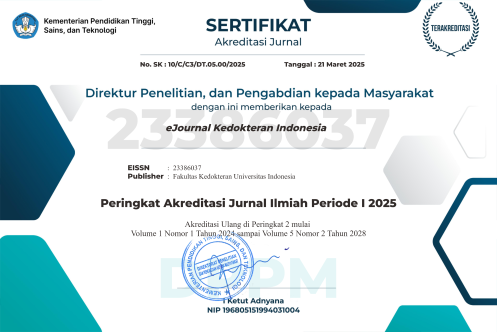
Comparing Clinical Outcomes Between Flexible and Fixed Progestin-Primed Ovarian Stimulation

Authors

  • R Muharam Obstetrics and Gynecology Department, Faculty of Medicine, Universitas Indonesia, Cipto Mangunkusumo Hospital, Jakarta
  • Edward Christopher Yo Department of Obstetrics and Gynecology, Faculty of Medicine, Universitas Indonesia – dr. Cipto Mangunkusumo National General Hospital, Jakarta, Indonesia
  • Tasya Kartika Department of Obstetrics and Gynecology, Faculty of Medicine, Universitas Indonesia – dr. Cipto Mangunkusumo National General Hospital, Jakarta, Indonesia
  • Alisha Nurdya Irzanti Department of Obstetrics and Gynecology, Faculty of Medicine, Universitas Indonesia – dr. Cipto Mangunkusumo National General Hospital, Jakarta, Indonesia
  • Achmad Kemal Harzif Department of Obstetrics and Gynecology, Faculty of Medicine, Universitas Indonesia – dr. Cipto Mangunkusumo National General Hospital, Jakarta, Indonesia-Yasmin IVF Clinic, dr. Cipto Mangunkusumo National General Hospital, Jakarta, Indonesia-Human Reproduction, Infertility, and Family Planning Cluster, Indonesia Reproductive Medicine Research And Training Center, Faculty Of Medicine, Universitas Indonesia, Jakarta, Indonesia
  • Mila Maidarti Department of Obstetrics and Gynecology, Faculty of Medicine, Universitas Indonesia – dr. Cipto Mangunkusumo National General Hospital, Jakarta, Indonesia-Yasmin IVF Clinic, dr. Cipto Mangunkusumo National General Hospital, Jakarta, Indonesia-Human Reproduction, Infertility, and Family Planning Cluster, Indonesia Reproductive Medicine Research And Training Center, Faculty Of Medicine, Universitas Indonesia, Jakarta, Indonesia
  • Gita Pratama Department of Obstetrics and Gynecology, Faculty of Medicine, Universitas Indonesia – dr. Cipto Mangunkusumo National General Hospital, Jakarta, Indonesia-Yasmin IVF Clinic, dr. Cipto Mangunkusumo National General Hospital, Jakarta, Indonesia-Human Reproduction, Infertility, and Family Planning Cluster, Indonesia Reproductive Medicine Research And Training Center, Faculty Of Medicine, Universitas Indonesia, Jakarta, Indonesia
  • Kanadi Sumapraja Department of Obstetrics and Gynecology, Faculty of Medicine, Universitas Indonesia – dr. Cipto Mangunkusumo National General Hospital, Jakarta, Indonesia-Yasmin IVF Clinic, dr. Cipto Mangunkusumo National General Hospital, Jakarta, Indonesia-Human Reproduction, Infertility, and Family Planning Cluster, Indonesia Reproductive Medicine Research And Training Center, Faculty Of Medicine, Universitas Indonesia, Jakarta, Indonesia
  • Andon Hestiantoro Department of Obstetrics and Gynecology, Faculty of Medicine, Universitas Indonesia – dr. Cipto Mangunkusumo National General Hospital, Jakarta, Indonesia-Yasmin IVF Clinic, dr. Cipto Mangunkusumo National General Hospital, Jakarta, Indonesia-Human Reproduction, Infertility, and Family Planning Cluster, Indonesia Reproductive Medicine Research And Training Center, Faculty Of Medicine, Universitas Indonesia, Jakarta, Indonesia
  • Budi Wiweko Department of Obstetrics and Gynecology, Faculty of Medicine, Universitas Indonesia – dr. Cipto Mangunkusumo National General Hospital, Jakarta, Indonesia-Yasmin IVF Clinic, dr. Cipto Mangunkusumo National General Hospital, Jakarta, Indonesia-Human Reproduction, Infertility, and Family Planning Cluster, Indonesia Reproductive Medicine Research And Training Center, Faculty Of Medicine, Universitas Indonesia, Jakarta, Indonesia

Keywords:

progestin-primed ovarian stimulation, flexible PPOS, fixed PPOS, in vitro fertilization, poor ovarian response

Abstract

Controlled ovarian stimulation (COS) is essential in assisted reproductive technology (ART) to obtain multiple oocytes. Gonadotropin-releasing hormone (GnRH) analogues have been used to prevent the premature luteinizing hormone (LH) surges. However, daily injections and high cost cause inconvenience and limit patients’ adherence. Recently, progestin-primed ovarian stimulation (PPOS) has emerged as an alternative. However, the optimal timing of progesterone administration remains unclear. This systematic review aimed to compare clinical outcomes between a fixed regimen that initiates progestin at the beginning of the cycle and a flexible regimen that initiates progestin later in the cycle. A comprehensive literature search was conducted in PubMed, Cochrane, Medline, and Embase Library to identify relevant studies published between January 2018 and April 2024. It was supplemented by manual searches, which identified 3 eligible retrospective cohort studies directly comparing fixed and flexible PPOS protocols. Selected studies were systematically appraised. Two studies in women with diminished ovarian reserve (DOR) found no significant differences between the two regimens, whereas one study in poor ovarian responders (POR) found a higher cumulative live birth rate (CLBR) and lower progesterone use in the flexible group, especially in older, low-prognosis women. Flexible and fixed PPOS regimens show comparable outcomes in DOR patients. Still, preliminary evidence shows potential advantages of the flexible timing in women with advanced age or POR. Therefore, future large-scale prospective studies are needed to validate these findings.

Downloads

Download data is not yet available.

Published

2026-04-25

How to Cite

Muharam, R., Yo, E. C. ., Kartika, T. ., Irzanti, A. N. ., Harzif, A. K. ., Maidarti, M. ., Pratama, G. ., Sumapraja, K. ., Hestiantoro, A. ., & Wiweko, B. . (2026). Comparing Clinical Outcomes Between Flexible and Fixed Progestin-Primed Ovarian Stimulation. EJournal Kedokteran Indonesia, 14(1). Retrieved from https://ejki.fk.ui.ac.id/index.php/journal/article/view/1275
Received 2025-11-14
Accepted 2026-04-14
Published 2026-04-25